

Spill the Ink: The Reputation Ink Podcast
The Case for Pursuing the CURT Awards of Excellence
Published on June 2, 2026
In this episode of “Spill the Ink,” Steven Gallo sits down with Greg Sizemore and Gregory Palmer of the Construction Users Roundtable (CURT) to discuss the organization’s annual Awards of Excellence: what they recognize, how the judging process works and what AEC firms can gain from putting together a submission.
Here’s a Glimpse of What You’ll Learn
- What the Construction Users Roundtable is and why Greg Sizemore founded it 25 years ago
- The three CURT Awards of Excellence — Safety, Workforce Development and Project Excellence — and what distinguishes each one
- Why safety and project excellence submissions are data-driven while workforce development relies more heavily on storytelling
- The most common mistakes firms make when applying and how to avoid them
- Why winning a CURT award carries value well beyond the trophy, from industry-wide exposure to owner pre-qualification signals
About Our Featured Guests
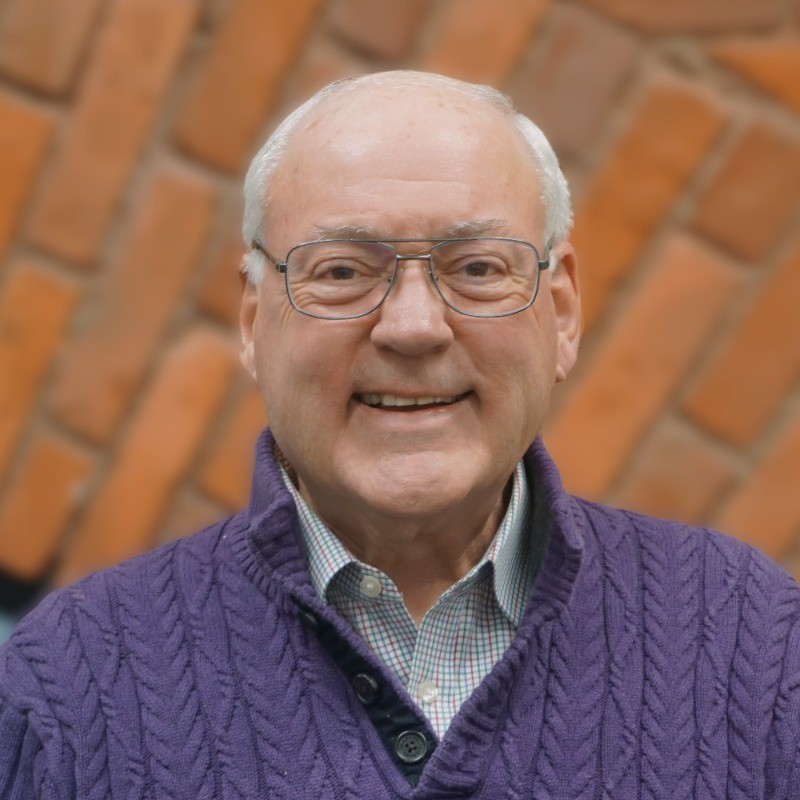
Greg Sizemore is the founder and president of the Construction Users Roundtable (CURT) and president of Sizemore & Company LLC. He founded CURT 25 years ago with a mission to help industrial owners get more construction for their money. He also serves as an adjunct professor at the University of Cincinnati, where he teaches construction law and leadership and decision making.
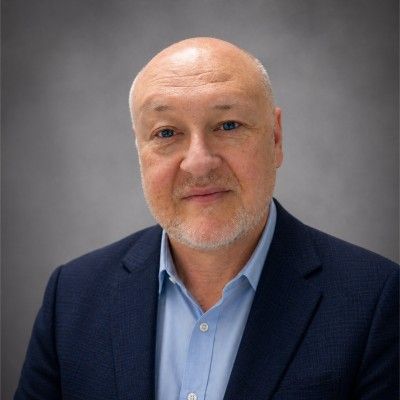
Gregory Palmer is the director of events and digital programs at CURT, where he has worked for more than 25 years. He oversees the organization’s awards programs and events, including the annual Awards of Excellence ceremony.
Resources Mentioned in This Episode
- Learn more about the CURT Awards of Excellence and access applications at curt.org/awards
- Follow CURT on LinkedIn
- Connect with Greg Sizemore on LinkedIn
- Connect with Gregory Palmer on LinkedIn
- Say hello to Steven Gallo on LinkedIn
Sponsor For This Episode
This episode is brought to you by Reputation Ink.
Founded by Michelle Calcote King, Reputation Ink is a marketing and public relations agency that serves B2B professional services firms of all shapes and sizes across the United States, including corporate law firms and architecture, engineering and construction (AEC) firms.
Reputation Ink understands how sophisticated corporate buyers find and select professional services firms. For more than a decade, they have helped firms grow through thought leadership-fueled strategies, including public relations, content marketing, video marketing, social media, podcasting, marketing strategy services, creative services and more.
To learn more, visit www.rep-ink.com or email them at [email protected] today.
Transcript
Disclaimer: This is an AI-generated transcript of our podcast. It may contain mistakes, including spelling and grammar errors.
[00:00:00] Steven Gallo: Hey, everyone. I’m Steven Gallo, your host and the vice president of client services at Reputation Ink. We’re a public relations and thought leadership marketing agency for B2B professional service firms, including those in architecture, engineering and construction.
Learn more at rep-ink — that’s ink with a K — .com. In the AEC industry, awards aren’t just trophies. They can be — or plaques, what have you. But they’re ultimately more than that. They’re marketing tools, qualification signals, proof points that your firm carries for years.
The Construction Users Roundtable presents its annual Awards of Excellence to honor the best in safety, workforce development and project delivery, and winning puts your firm in front of the project owners who are doing that hiring. Today we are very fortunate to be sitting down with the two people behind the awards to talk about what it takes to put together a winning submission. That’s CURT’s Executive Vice President Greg Sizemore and Director of Events and Digital Programs Gregory Palmer. Thanks to both of you for being here today.
[00:01:08] Greg Sizemore: Great to be here, Steve. Thank you for the intro. We’re excited to share.
[00:01:12] Steven Gallo: Of course. And I hear around the office it’s Greg and Palmer to help keep things straight. We’ll go with that too, if that’s all right.
[00:01:18] Greg Sizemore: I was the first and oldest, so I took the name Greg. He was literally the second, and a little younger, so since his last name sounds very New England preppy, he was quite content to go with Palmer.
[00:01:32] Steven Gallo: I like it. That works. Well, Greg, maybe if you don’t mind starting us off — would love to just get an overview of the Construction Users Roundtable and tell us why CURT created these awards in the first place.
[00:01:49] Greg Sizemore: Thanks, Steve. The Construction Users Roundtable, commonly called CURT, was developed about 25 years ago. I was its founder. It is the legacy group of the Construction Committee of the Business Roundtable in Washington, D.C.
The Business Roundtable at the time was comprised of about 150 Fortune 500 CEOs. In their limited wisdom, they decided the construction industry was not important enough for CEO attention. They’ve since changed their mind on that, of course. And so they sunset the Construction Committee of the Business Roundtable. I came in afterwards, picked up some of the broken pieces, and with two or three other owners, we formed what today is called the Construction Users Roundtable. Its primary purpose, Steve, is to focus on the industrial owner community, but we’re not exclusively industrial owner.
For example, we’ve had the U.S. Department of State, the Arctic Capital and the General Services Administration as members, and a sprinkling of universities along the way. But primarily focusing on the industrial user and sharing resources, perspectives and learnings one with the other.
We do that with a series of meetings, seminars and conferences, and together we have sprint teams that develop white papers and that sort of thing. But the end goal, if I had to summarize it, was simply more construction for the money. Construction’s hard. It’s complex. We feel that we can help in some very important areas — the ones that you mentioned that denote the award.
[00:03:41] Steven Gallo: That’s fantastic. And so what grew out of that were these awards programs. Can you tell me a bit about the genesis of that and what the idea was in having a program at all?
[00:03:52] Greg Sizemore: We feel responsible not only for our members and providing them resources to do a better job, but we also felt a responsibility to the industry at large.
These are very important areas. Safety — sending men and women home from the job the way they came to your job — is exceedingly important for every member of CURT. There are ways to improve construction safety. Same thing with workforce development. It is indeed the No. 1 challenge on construction projects today through the whole organization — not only the skilled trades in the field, but the folks in the office who plan and manage and execute: construction engineers, construction managers. And there’s a shortage — a through thread of shortages in all those areas.
And then the third thing is that historically, construction has not improved its productivity metrics in the last number of years. We’re way lagging behind. So the concept to receive, evaluate, curate and deploy information on project excellence, primarily focused on productivity improvement, became the genesis of the other award.
In addition, throughout the year we recognize outstanding service by some of our members. We recognize women in construction — we have a women in construction initiative and we recognize those participants in a public way. So the genesis of the awards is: let’s recognize and share those who are out front in improving safety, being creative with workforce and addressing project excellence, and let’s share it with the entire industry because it’s our duty. The rising tide lifts all ships, and we want to help our industry improve.
[00:05:53] Steven Gallo: Absolutely. And you sort of alluded to this a bit, but Palmer, you mentioned these three categories — I think they’re great ones and critical ones to focus on. Why these three, and what are you looking for in folks who submit?
[00:06:10] Gregory Palmer: The safety awards have been around from the very beginning of CURT, so we’ve been doing those from the start. If we’re not taking care of our people — if we’re not sending them home at least as good as they arrived — then what’s the point?
For years, construction was the deadliest profession. The fatality rate was embarrassingly high, and one of the things that the Construction Committee and then CURT continued was driving to zero. That number has improved greatly, and the awards celebrate that. They celebrate it for the folks who have implemented the recommendations from the CURT Construction Safety Blueprint, which started out as the Owner Safety Blueprint. But safety is broader than just the owner, so we removed that name. Now it’s just the Construction Safety Blueprint.
Then in 2009, we realized there are some people doing great things in workforce development, and so it was time to start celebrating them — organizations doing great, innovative training and education programs. And then lately we’ve begun to give a $5,000 scholarship to a nonprofit that wins the award. So you’ll have owners apply and contractors apply who are doing great things, but then on occasion there’ll be a nonprofit — a bootstrap startup that barely has the money to do it, let alone come and receive the award. So we, in partnership with a few other folks, came up with this $5,000 scholarship to help them propagate their service to the industry.
And then in 2016, we began to acknowledge overall project excellence. So you might be great at safety and great at workforce development and great at lean implementation and every other part of the project, but we were only focusing on safety and workforce. This is a chance to give recognition to contractors and owners for excellence start to finish on a project.
[00:08:34] Steven Gallo: I love that. And as I understand it, Greg, applicants don’t necessarily have to be CURT members. Is that right? And why open it up?
[00:08:47] Greg Sizemore: The reason we opened it up is we feel a responsibility to the industry — not just for us by us. By becoming a member of CURT, you’re privy to certain white papers, roundtable discussions, webinars, conferences, etc., that are CURT member exclusive. But for the award program, we want to see who else is doing best in class out there and allow them to be recognized as well, and then we promote that.
It sounds altruistic, but we mean it sincerely. We want to improve the industry, and we believe safety, workforce and project excellence and productivity are the ways to do that. By the way, curt.org is the website — C-U-R-T.org, very easy to remember. If you go onto curt.org, you can get more information, or certainly call the CURT office and ask for Greg Palmer or Teresa, and we’ll be able to help guide you through the process.
[00:10:02] Steven Gallo: Fantastic, and great to mention that. And I imagine you get a good number of submissions. Part of me is just curious what that typically looks like in terms of what you receive through each award cycle. Does it vary?
[00:10:17] Greg Sizemore: I don’t know the exact number from year to year, and it does vary because it takes a little effort to put them together. But we always have a fair number to evaluate. And Greg, maybe you can tell us a little about how you go about executing the judging process — how you review these things and any conflicts of interest that may occur in that process.
[00:10:43] Gregory Palmer: It is cyclical. It does go up and down a bit. You can only win every other year, which spreads the joy. You may have Procter & Gamble, who is great at everything they do, and if they won every year, nobody else gets a chance. So if you won in 2025, you’re not eligible to apply in 2026 — you’ll have to wait until 2027. There is some of that ebb and flow.
And then the judging process: they’re all judged by industry professionals with expertise in that area. To prevent any conflict of interest, if their organization submits an application in the area they’re judging, they recuse themselves from it. So it’s all very above board. There’s no “Oh, well, of course they won — they were on the judging committee.” They’ve removed themselves from it, and it keeps it very clean.
[00:11:49] Steven Gallo: That makes a lot of sense and preserves the integrity of the judging, which is important for any awards program like this.
And I understand, Greg, that safety and project excellence are pretty data- and numbers-driven categories. What are the metrics that judges are looking at specifically?
[00:12:10] Greg Sizemore: I’m going to defer to Palmer in just a moment to answer the specifics of that question since he manages this whole process. But I will tell you that in addition to the metrics, we’re also looking for innovative program ideas — what can improve safety performance. A new and emerging area is mental wellness. The dark word for that is suicide prevention. Safety, in recent years — very recently, the last couple of three years — has embraced the concept of mental wellness in our industry.
So we’re looking for program elements in addition to the metrics. We’re looking for innovation, effectiveness of a program, ease of understanding the program, where they’ve used it, and if they have any particular outcomes that are non-metrics-driven but nevertheless worthy of recognition — particularly in the safety area, and most recently, particularly in the mental wellness area of their application.
When it comes to workforce development, we’ve had some pretty creative work done by Southwest Indian tribal groups. There have been some Southwest Indian tribes that have picked up the whole concept of trades training and done a marvelous job with it — deploying their people and increasing the availability of skilled labor in some of those remote areas. They were one of our award winners.
When it comes to project excellence, yes, we look for data points. Greg, I’m going to defer to you on what specific data points are evaluated in these applications.
[00:15:00] Gregory Palmer: For safety, we ask you to submit your TRIR and some of your OSHA log numbers. It’s spelled out very clearly. We ask for three years’ worth of information, and then we do ask for some backup information — pages from your safety program.
For project excellence, it’s just numbers again. We ask for the man-hours worked, some of your safety records and things like that, plus some backup information. None of it would be considered proprietary or a violation of a non-compete. It’s all stuff that would be public anyway — you’re just compiling it in one place for our judges to look at.
[00:15:48] Steven Gallo: And let’s stay with you, Palmer, in terms of the workforce development category. As Greg mentioned, it feels like that leans a bit more on the storytelling aspect. What does a strong submission in that category specifically look like?
[00:16:06] Gregory Palmer: It does lean on storytelling. The very second question, after we’ve asked you what the name of your program is, is: What’s the story of your program? We give you 500 words to tell the story, the why and the passion behind it.
Then we’ll ask for some things like your mission statement, your methodology and your measures for determining success. But really, that second question — tell us the story of it — is what brings in the compelling story of the Southwest Indian Industrial Construction Group. It brings in Turner and gives them an opportunity to talk about what they did with FC Cincinnati’s stadium, putting folks to work — 80% of which are still employed in the industry years later. It’s storytelling that you don’t get to tell in safety because the numbers tell the story. The numbers are often less concrete and obvious in workforce development, but the story is really the thing.
[00:17:15] Greg Sizemore: Let me add to that. What was the effectiveness of it? It might sound cool, but does it pass the so what test? For example, with the FC Cincinnati stadium — which was quite large here — it went into a neighborhood that was historically low income and underemployed. The work that they did with that neighborhood to provide opportunity for those residents, or former and displaced residents, was just phenomenal. Hats off to Turner.
Those are the kinds of things we look for. Are they duplicatable? Did it pass the so what test? What was the result, and how easy is it to implement? Those are the kinds of things that people are interested in knowing about, and certainly that we’re interested in recognizing them for.
[00:18:08] Steven Gallo: It’s an industry of impact and outcomes. That’s awesome.
And Palmer, as we mentioned, you’re closest to these submissions. For our listeners who might be interested in applying themselves, they may be curious: What are some of the common pitfalls? Can you speak to some of the missteps or things that you’ve seen go wrong on applications that folks can learn from?
[00:18:38] Gregory Palmer: The No. 1 thing is not following the instructions. We give you some limits on how many pages of supplemental material you can submit, and sometimes they’ll send 10 times more than we’ve allowed. That makes it very difficult to judge and weed through what really supports what you’ve submitted. And then keeping your responses within the recommended number of words. Staying within the limits is really what causes an application to be difficult to judge. All of that is clearly laid out in the instructions.
[00:19:24] Steven Gallo: Reminds me of that pop quiz in elementary school where the first instruction was to write your name and turn it in. If you jump right in without reading, you’d get caught.
[00:19:36] Greg Sizemore: Some things never change, do they?
[00:19:39] Steven Gallo: For better or for worse. But that’s a great point.
And for both of you — these submissions really take a good bit of time and resources because they’re comprehensive and meant to really tell that story. I imagine that folks are pretty stretched to find that time. So what’s the sell on why it’s worth the effort, and what do you get out of it?
[00:20:15] Greg Sizemore: I smile because that’s probably a better question for you, being in the marketing space. But we feel, No. 1, recognition is valuable. And when we do make a recognition, there’s a big event — typically in November — where we celebrate our award winners. There are lots of photos taken, lots of photos on the website. We promote the award winners with a writeup of what they did, how they did it, and offer the reader an opportunity to inquire for more information, either from our office or from the award recipient themselves.
The other thing is that we highlight them in our Voice magazine — I think that goes out to how many people, Greg?
[00:21:06] Gregory Palmer: 13,000.
[00:21:07] Greg Sizemore: 13,000. We also put them in our newsletter and special announcement emails — our email list, which goes out to more than 9,000 people. And then they become celebrated when we do a seminar or workshop on a particular subject related to safety or workforce. We’ll invite those award winners to participate. So they get notoriety all around.
And the awards themselves are absolutely gorgeous — they use glass, steel, wood, all the raw elements of construction, and they’re quite large and very prominent.
And then internally, whether it’s a Procter & Gamble or a Turner or a Bechtel or a Merck Pharmaceutical, there’s all kinds of opportunity to promote what they’re doing internally using wonderful organizations like yours, Steve.
[00:22:07] Steven Gallo: And Palmer, I’d love to kick it to you as well — have you heard any feedback from folks on the anecdotal value they’ve gotten out of winning?
[00:22:23] Gregory Palmer: I haven’t heard anything number-wise, although I do know that there are some owners who give a leg up to contractors who’ve won safety awards from CURT because they already know those contractors were a part of developing the Construction Safety Blueprint. They already know they’re using the guidelines that they helped approve.
We hear from the workforce development groups that winning the award really helps promote them. Usually they’re a grassroots organization happening just locally, but this gives them a little national attention. So it helps them grow within their area and replicate that in other places. The recognition is what they’re most excited about. The award is beautiful, the dinner is great, and the public recognition at the event is wonderful — but it’s the after-the-event recognition that really is the value.
[00:23:25] Steven Gallo: And you mentioned the magazine and the email newsletter — it’s a sizable audience. Who’s in that audience, and what does that exposure mean for winners?
[00:23:39] Greg Sizemore: Owners, contractors, subcontractors, legal organizations — just a nice cross-section of the industry.
And I’ll give you another example of how an award winner has used it. Last year there was an award recipient from the West Virginia Building Trades Group. They had gotten some money from the State House to promote the availability of apprenticeship training. This award validated that what they’re saying is true. They’ve taken that back, and they’ll likely get more money from the state because it’s been recognized by a group like ours as being a leader in that space. It’s a seven-figure amount that the state made available to them.
So these things can turn into tangible — as Palmer accurately mentioned — tangible jobs, or points when you’re being evaluated for a project if you’re a contractor. Internally, within an organization like a Merck or a Procter & Gamble, it gets a wink and a nod from senior folks for more of the same. And there can be PR and even political ramifications for receiving an award, as I just described in West Virginia.
[00:25:04] Steven Gallo: And that third-party validation — that credibility of this outside group having evaluated and recognized you — goes a long way.
[00:25:16] Greg Sizemore: That’s exactly right.
[00:25:18] Steven Gallo: I noticed several past winners in the industrial space. But who would be a great candidate out there thinking, “Is our firm really going to make the cut? Should we give this a go?” What would you say to them?
[00:25:48] Greg Sizemore: Particularly for safety, there are different categories you can apply in, so a small contractor regional to Florida or Wisconsin — wherever — is not competing against a multinational contractor like Turner Construction or Bechtel. We try to break those down into sensible, reasonable categories. Greg, say more?
[00:26:21] Gregory Palmer: We use three NAICS codes — general contractor, specialty contractor and heavy contractor. And then within that, we break it down by work hours. So it helps you compete among your peers and not like a kindergartner against a senior in high school — not by experience, but by general size.
We’ve also had hospital systems win safety awards. So anybody who’s building really could apply for one of these.
[00:27:02] Steven Gallo: That casts a nice wide net. This has all been really helpful for folks who may be listening in and wanting to know more about the program, the organization and how to approach a submission. Is there anything we haven’t touched on yet, or maybe one final thought each of you would want to leave our listeners with?
[00:27:26] Greg Sizemore: I think the problem area for workforce development — and an area of emphasis — is women in construction. Depending on which report you read, over the last 10 years the participation rate for females in construction is 11% to 14%. It was that way 10 years ago. It’s that way now. They’re 50% of our demographic in this country, but for some reason we’re having trouble attracting them to the business. Once we do, is the training adequate? What are the barriers and the detractors for females coming into our industry? We desperately need more folks, and that is probably the most underrepresented demographic there is.
So in the future, if you have a workforce development program that has really targeted the female population, submit the application. Let’s see what you’re doing and evaluate it.
And in safety, the mirror image of that would be mental wellness. What are we doing to improve that in the industry?
I think those two are probably areas of emphasis, but they’re not requirements. We’re just looking at the best overall performance in the respective categories. But from my perspective, if you’re doing anything in those two particular areas, I invite you to apply. And Greg Palmer and his team are very helpful in coaching an applicant — you can call the office and you’ll get friendly help. Past winners would probably give you some friendly help as well, especially those that have to sit out a year, so there’s no disincentive for them to step up.
So if you’re interested, curt.org is our website. The name of the organization is the Construction Users Roundtable. You can find contact information, email, phone numbers and other information on curt.org — C-U-R-T.org. Greg, do you have any final comments?
[00:29:42] Gregory Palmer: Just some logistical information. The awards and all of the applications and instructions are available at curt.org/awards. The deadline to submit is July 2. The timeline might be a little tight, but I absolutely think it’s worth the effort to get that in. Or be prepared for next year — even if you just download the applications to see what’s required. If you can’t get it done in time for this year, you’re just that much farther down the road on applying in 2027.
[00:30:16] Greg Sizemore: And I would tell you, it’s not a PhD dissertation. So don’t let some of these cautions prevent you from going for it. You’ve still got nearly two months. It can be done by large and small organizations. We would invite your participation. Let’s see what we’ve got out there in the industry, and we’d be happy to recognize you as a stellar performer.
[00:30:38] Steven Gallo: Fantastic. You heard it here, folks — that’s an open invitation. Send your submissions in. There’s still a little bit of time to do that. If not this year, then for next year. Thank you to you both for coming on and sharing your insights. We’ve been talking to Greg Sizemore, executive vice president of CURT, and Gregory Palmer, director of events and digital programs. Thank you both for your time today.
[00:31:12] Greg Sizemore: We have just developed a tool for safety and workforce called the CURT Solutions Portal. It’s powered by a platform called Commodore. We’ve ingested 20,000 to 30,000 items in our knowledge base over the last several years, many of which include safety and workforce data, white papers, presentations and panel discussions. Everything’s been curated, everything is traceable.
If you’re interested in learning about the CURT Solutions Portal powered by Commodore, call Greg Palmer. You can contact him at [email protected] — that’s G-P-A-L-M-E-R @curt.org. Inquire about the CURT Solutions Portal. It’s quite interesting — maybe it’s a subject of a future podcast, Steve.
[00:32:00] Steven Gallo: There you go. Anything else on that front, Palmer?
[00:32:05] Gregory Palmer: No, I’m happy to handle those demos. Just 15 minutes is all it takes.
[00:32:13] Steven Gallo: Fantastic. Thank you both again. That’s curt.org — C-U-R-T dot O-R-G — to learn more about this great organization and awards program. The deadline is coming up soon, so check into that. Thank you both again for your time.
[00:32:28] Gregory Palmer: A pleasure.
[00:32:29] Greg Sizemore: It’s been our joy. Thank you, Steve. We’re always honored when people ask about us. Thank you.
[00:32:34] Steven Gallo: Appreciate the work you’re doing for the industry.
Related AEC, B2B and Construction Content
Building a Bold Brand for an Award-Winning Women in Construction Initiative
Jessi Bruton | Jul. 22, 2026

From Occasional Commentary to a Consistent Thought Leadership Program
Reputation Ink | Mar. 19, 2026




Join the INKsights Email List
Get Exclusive Updates on Awards, Lists, Rankings, Editorial Opps and More.
Subscribe to our newsletter, INKsights, to receive insights (pun intended) on thought leadership, public relations, and marketing for B2B professional services firms sent straight to your inbox.
Available only to our email subscribers:
Once a month, you’ll receive the latest awards, rankings, lists and editorial opportunities in the legal or AEC industry (you choose which you’d like to receive).
In the off weeks, we send you our latest thinking on the marketing and PR issues facing those industries. You can opt out anytime (although we’ll bet our favorite coffee mug you’ll never want to leave).