

Spill the Ink: The Reputation Ink Podcast
Know Before They Go: Knowledge Transfer as an AEC Marketing Strategy
Published on July 30, 2026
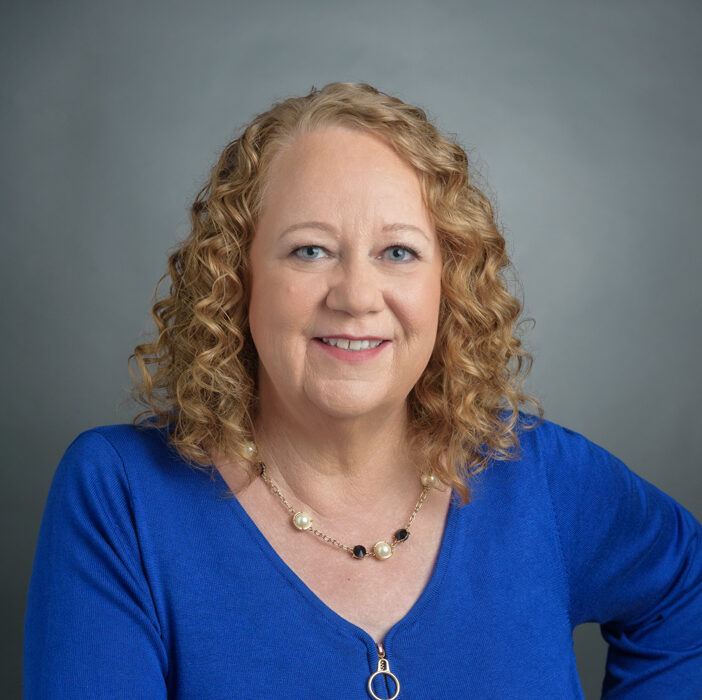
In this episode of “Spill the Ink,” Steven Gallo talks with Barbara Stiles, FSMPS, CPSM, senior consultant in the Strategic Growth Advisory practice at Stambaugh Ness, about why institutional knowledge is one of the most valuable — and most vulnerable — assets an AEC firm has, and what marketing and business development leaders can do to capture it before it walks out the door.
Here’s a Glimpse of What You’ll Learn
- What gets lost when an experienced employee leaves an AEC firm — and why it goes beyond technical knowledge
- The difference between explicit and tacit knowledge, and why tacit knowledge is where competitive advantage lives
- How marketing and BD teams can make the business case for a knowledge transfer initiative to firm leadership
- Practical first steps for firms that want to start capturing institutional knowledge before it becomes a crisis
About Our Featured Guest
Barbara Stiles, FSMPS, CPSM, is a Senior Consultant in the Strategic Growth Advisory practice at Stambaugh Ness. With more than 35 years of experience in the AEC industry, she is a proven leader in strategic planning, business development and marketing. A former vice president and shareholder at WGI, Inc., she has worked with firms ranging from 200 to 80,000 employees.
Barbara has been presenting on business development, leadership, communication and strategic planning topics for more than 20 years at the local, regional and national levels. She is a longtime member of SMPS, has served on the SMPS National board and the SMPS Foundation board, and was recognized as a Fellow of SMPS in 2016. She also holds the Certified Professional Services Marketer (CPSM) designation.
Resources Mentioned in This Episode
- Check out Stambaugh Ness
- Follow Stambaugh Ness on LinkedIn, Facebook and Instagram
- Connect with Barbara Stiles on LinkedIn
- Say hello to Steven Gallo on LinkedIn
Sponsor For This Episode
This episode is brought to you by Reputation Ink.
Founded by Michelle Calcote King, Reputation Ink is a marketing and public relations agency that serves B2B professional services firms of all shapes and sizes across the United States, including corporate law firms and architecture, engineering and construction (AEC) firms.
Reputation Ink understands how sophisticated corporate buyers find and select professional services firms. For more than a decade, they have helped firms grow through thought leadership-fueled strategies, including public relations, content marketing, video marketing, social media, podcasting, marketing strategy services, creative services and more.
To learn more, visit www.rep-ink.com or email them at [email protected] today.
Transcript
Disclaimer: This is an AI-generated transcript of our podcast. It may contain mistakes, including spelling and grammar errors.
[00:00:00] Steven Gallo: Hi, everyone. I’m Steven Gallo, your host and VP of Client Services at Reputation Ink. We’re a public relations and thought leadership marketing agency for B2B professional services firms, including those in architecture, engineering, and construction. You can learn more at rep-ink, that’s ink with a K, .com.
I’m very excited for today’s show, not just because we have a great guest and friend of mine on, but also because we’re going to be talking about something that I think is really touching every firm in the AEC space — and honestly, probably beyond that, in other industries as well. Every AEC firm has a wealth of knowledge that’s built up over decades: client relationships, project history, hard-won expertise. But with about 11,000 baby boomers turning 65 every day and average employee tenure down to about five years, more of that knowledge is walking out the door than ever before. Our guest today is Barbi Stiles. She’s a senior consultant at Stambaugh Ness. She spent 35-plus years inside AEC firms and now helps them think strategically about how to capture that knowledge, protect it, and activate it — including as a marketing and business development asset. Barbi, welcome to the show. So glad to have you on.
[00:01:54] Barbi Stiles: Thanks. I’m glad to be here.
[00:01:57] Steven Gallo: For those who aren’t familiar with Stambaugh Ness, tell us about the firms you work with and your role.
[00:02:03] Barbi Stiles: Sure. Stambaugh Ness is an advisory and consulting firm, and we work solely in the architecture, engineering, and construction world. All of our clients are AEC firms. The company has a very diverse menu of services that they can provide, and we really help you with the business side of your business. So everything from compliance and FAR audits and government contract services and tax solutions, ERP software, workforce and talent solutions, outsourced accounting and IT. We also can help you with ownership transition, ESOP transition, mergers and acquisitions. But my group is the strategic growth advisory, and we help firms grow — strategically, smartly, and sustainably. We do a lot of strategic planning, marketing and business development assessments,
[00:03:09] market assessments, client perception studies, and we also do a lot of training — around seller-doers, project manager skills, marketing and business development skill sets, communication and leadership. So it is a very wide plethora of things that Stambaugh Ness can provide.
[00:03:35] Steven Gallo: A lot of knowledge there. And the training and the sustainable growth piece is a big part of that — it’s one thing to grow, but to do it in a way that is tenable over a period of time. And it’s hard to do that when you have folks walking out the door with institutional knowledge that may not have been passed down to the next generation of employees. I know you’ve built a conference session around knowledge transfer, and the rooms have been packed — I’ve been there for them. But for listeners who haven’t caught you live yet, what’s the CliffsNotes version?
[00:04:16] Barbi Stiles: The CliffsNotes is that knowledge in an AEC firm is absolutely one of the most valuable assets that you have. But it is also probably the easiest one to lose when those experienced people walk out the door. The session is about how firms can systematically capture the technical, client, business development, and organizational knowledge before it does walk out the door. Because ultimately it’s all about protecting those client relationships, preserving the expertise that your company has worked hard to gain, and preparing that next generation to succeed when they step up to those leadership levels.
[00:05:06] Steven Gallo: When you have one of these experienced people who leaves an AEC firm, it’s one thing to say, “We have knowledge walking out the door,” but what tends to specifically get lost that people may not think about initially?
[00:05:21] Barbi Stiles: It’s not just the technical knowledge. Especially if it was an engineer or an architect or a planner that walks out the door, it’s not just their technical knowledge that leaves. Firms lose client history. They lose relationship insights. They lose the lessons learned from working with clients and the negotiation approaches that work. And then just that institutional memory — all of that can get lost. Senior staff often know things that aren’t documented anywhere: client preferences, the political dynamics inside of a client, decision-making styles, past project experiences — maybe before they were even at your firm. And firms can also lose those company stories, especially if you’re a smaller firm and your founders are retiring. Those stories about how your company got started could be gone, and the cultural knowledge around your firm could go, along with the context behind why certain decisions were made in the past and why certain processes exist now.
[00:06:42] Steven Gallo: It’s sort of a now-or-never situation to capture it and prevent that loss. When I worked in TV news as a reporter, if there was a house fire, you always get the footage of what’s burning first, and then you can get the interviews and gather everything else — because once that is gone, there’s no getting it back. I’m wondering, especially now, why this is more urgent than it was even 10 or 15 years ago.
[00:07:23] Barbi Stiles: Demographics alone make it more urgent than it used to be. As you mentioned, 11,000 baby boomers are reaching retirement age every day. They don’t all retire at 65, but many AEC firms have significant knowledge concentrated in the senior staff that are getting to that age. And as you also said, employee tenure is much shorter than it used to be, so firms have less time to transfer knowledge before people move on. The average tenure in a job right now is about five years, and for the newest generation — Gen Z in the workforce — it’s less than three.
[00:08:12] Steven Gallo: Wow.
[00:08:13] Barbi Stiles: So think about it. Even as they get older, if they’re still moving jobs every three to four years, when they do get to that point, they have knowledge that needs to be captured — and if they’re in and out in three years, that could become a little more difficult. Also, as firms focus more on succession planning and ownership transitions, knowledge transfer can become a very critical business continuity issue. It is definitely a more urgent issue today than it was even just a few years ago.
[00:08:55] Steven Gallo: That makes sense. Every firm is a little different, of course, but we tend to see firms being really good about capturing project information — the nuts and bolts — because that’s sort of immediately what comes to mind. But when it comes to some of this more intangible knowledge, why is it so rare to see firms actually capturing it and systematically using it well? What’s that disconnect?
[00:09:27] Barbi Stiles: Most firms recognize that there is a problem, but then they wait until someone announces their retirement or resignation to maybe do something about it — and that’s usually way too late. If you want to capture your knowledge well, it requires an intentional effort. Many firms assume that it will just happen naturally through the day-to-day interactions that their staff are having with each other — that all of this knowledge in one person’s head is just going to naturally transfer to somebody else. But the most valuable knowledge a lot of times is difficult to document because it’s not based on a project in your CRM. It’s really based on somebody’s personal experiences, their judgments, and the relationships that they have, rather than procedures that are easier to document.
[00:10:38] Steven Gallo: Yeah, that’s a great point. And I imagine a lot of folks — particularly in our audience, marketers and business developers — think of this as, “Oh, that’s an HR problem,” or, “This is an operations issue.” What’s your argument for why this is a marketing problem?
[00:11:20] Barbi Stiles: Marketing and business development teams in most companies really are the stewards of the client intelligence — the company stories, the market knowledge, the relationship history. HR isn’t involved in most of that. Operations maybe, but they’re not looking at it from a holistic viewpoint. They’re looking at it from a “this is my client” viewpoint. Marketers and business developers have a broader view on that. And when a rainmaker leaves your firm, your firm can lose decades of client relationship knowledge, and that directly impacts future revenue. Marketing and business development teams should be a very important part of your growth strategy, and so they need to be involved in things like that. A practical example is when a longtime client manager retires and nobody knows that client’s preferences, who the key decision-makers are, the past challenges encountered with that client, or why they won projects in the first place. Those are all marketing and business development things to deal with. So they have to be part of the team — not to say that HR is not part of the team, not to say that IT won’t be part of the team when you’re putting together your knowledge transfer program, but it definitely needs to be led by marketing and business development, I believe.
[00:13:06] Steven Gallo: They’re really the stewards of the stories and have that interconnectedness that other departments just don’t have the same perspective on. You distinguish between explicit knowledge and tacit knowledge, and I think this is interesting. Can you walk us through that framework and why it matters for how firms approach this whole process?
[00:13:32] Barbi Stiles: Sure. Explicit knowledge is knowledge that is easy to document — things like your CRM data, your standard operating procedures, your employee manual, the workflows that your company uses, project processes, case studies. All of those things that are easy to document, you can write them down and have a library for them. That’s explicit knowledge. Tacit knowledge is much harder to capture because it’s based on someone’s experiences, intuition, judgment, and relationships. Firms often really focus on capturing that explicit knowledge because it is easier to capture, but they kind of overlook the tacit knowledge side. And usually that’s where the greatest competitive advantage your company has resides — in that tacit knowledge. That’s why having a knowledge transfer program that includes things like mentoring, job shadowing, and storytelling — and not just documentation — is very important.
[00:14:55] Steven Gallo: I’m wondering if we can dig into that a little bit more and share how you’ve seen that look when it’s been done well. How have you seen tacit knowledge captured effectively?
[00:15:12] Barbi Stiles: A lot of companies have formal mentor/mentee programs in place where they are matching a senior-level person and a junior-level person together to learn from each other for a year. That’s a great way of doing it. But if you don’t have a formal mentoring process at your firm, another way of doing it is job shadowing. At Stambaugh Ness, we call it “plus ones.” So if you are a BD person and you’re going out for a client meeting, take someone along that needs to learn how to do a client meeting and can also watch you in action and how you work with that client. Take somebody along to job shadow with you, and then you have that opportunity for instant feedback and questions afterwards. People learn very well from experiences, more than they learn from just somebody talking to them about it. So they need that experience of doing that job shadowing.
From the storytelling side, you have to look at who you’re trying to get the knowledge from. Some people are like, “I will never take somebody around with me. I don’t want to do that.” But they might be willing to come in and do a one-hour lunch and learn where they can talk about things, show people, and do scenario planning. Maybe you set up a lunch-and-learn program where all of these senior leaders are coming in and talking to more than one person at a time. Another approach that works really well — especially if you have firm founders who are getting ready to retire as part of succession planning — is to sit them down and videotape them. Ask them: How did the firm get started? Who was our first client and how did that happen? How did you build the culture? Have that video that you can use forever — as part of onboarding for new folks so they understand how the firm came to be and why it’s successful. There are just so many different ways that you can capture that tacit knowledge. It just depends on the comfort level of the people involved.
[00:17:37] Steven Gallo: A lot of roads in, but ultimately capturing that fire while it’s still burning. You’ve touched on a few areas already, but are there any other particular areas of knowledge that are especially critical for marketing and BD that we haven’t touched on?
[00:18:03] Barbi Stiles: Client relationship knowledge is probably the most valuable within marketing and BD — the client preferences, the key contacts, the contract histories, the lessons learned. Some of that’s explicit knowledge and some of that’s tacit. The business development knowledge is also critical: prospecting strategies that a BD director might have, the sales approaches they like to use, market-specific tactics they’ve developed over the years, negotiation techniques they’ve learned. That’s all important to pass on.
And something that gets overlooked a lot is industry and association relationships. Those matter as well. Many senior professionals have built very large networks over the decades through their activities in industry and professional associations, and that knowledge needs to be intentionally transferred so that you use all of that.
[00:19:33] Steven Gallo: That’s knowledge that, as a firm, you’ve invested in developing over time, so that’s an asset you don’t want to lose.
[00:19:43] Barbi Stiles: Yeah. And people don’t think about who you know in these associations, and why it’s been helpful to your company, and why you need to continue building relationships within that association. So I think that’s one of the big ones.
[00:20:00] Steven Gallo: Yeah, keep that momentum going. That’s a great point. For a marketing director who’s convinced this matters but may not know where to begin, what do you tell them?
[00:20:18] Barbi Stiles: I always tell them — especially in my conference sessions, where we talk about what a full program could look like — you have to start small. Identify two or three senior staff members whose knowledge might be difficult to replace if they left tomorrow. Start small. Start talking to them. Start figuring out what it is that you want to capture. But I think you first want to focus on capturing that client relationship information and the business development insights, because those often have the greatest revenue impact when they walk out the door. You could create a small pilot using some of the simpler approaches — interviewing folks, job shadowing, making sure your CRM is up to date — before you try to build something very large and complex. And you may not need something very large and complex.
[00:21:27] Steven Gallo: Now flip it for me. How does a marketer make this business case to leadership before we go off that cliff? I know that is inevitably a challenge for some. What are your strategies there?
[00:21:48] Barbi Stiles: Marketing and business development isn’t always seen as one of the priority departments in some firms. It should be part of the strategic growth plan, but sometimes it’s not. So for marketing leaders who need to make the business case, you need to make it a business case. Position it as a risk management and revenue protection initiative. It’s not a training program. It really is a risk management and revenue protection issue. Ask your leadership a very simple question: If our top business developer or seller-doer or technical expert or principal left tomorrow, what knowledge would disappear with them? Then connect that knowledge transfer directly to succession planning, client retention, project quality, and future growth. And emphasize that firms that don’t do this end up rebuying that knowledge — because of rework that’s happening, lost opportunities because nobody knew what was going on, inefficient onboarding with new staff. There is definitely a cost to not doing it. And if you can structure it that way to firm leadership, it speaks more to them.
[00:23:40] Steven Gallo: That is the reality of it, but it’s not always an immediate effect that you feel. So it’s, “This is not a problem today, it’s a problem for tomorrow” — until tomorrow comes. Is there one final thought you would want to leave our listeners with, or one thing they can do today to get rolling in the right direction with an initiative like this?
[00:24:13] Barbi Stiles: The best time to start thinking about knowledge transfer is before you really need it. When you really need it, the fire is already going. You really need to start thinking about it before you need it. And it’s not really about documents. It’s about ensuring that the relationships and the expertise and the experience that your firm has can continue to create value for you long after individual people move along. Firms that have intentional knowledge transfer don’t just preserve the past of their firm — they can really accelerate the future growth of the firm and the success of the next generation of leaders. And I think that’s just a bonus of speaking to knowledge transfer.
[00:25:11] Steven Gallo: Speaking of momentum — exactly. For folks who want to learn more or get in touch with you, Barbi, what’s the best way they can reach out and learn more about the work you do?
[00:25:30] Barbi Stiles: The best way to reach out to me is probably via email. My email address is bstyles — S-T-I-L-E-S — @stambaughness.com. You can always go to the Stambaugh Ness website and click on “People” to find me there as well. I’m happy to talk with anybody about knowledge transfer or any other ways that I or Stambaugh Ness could help their firm.
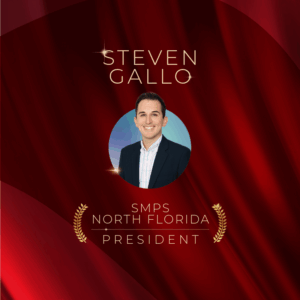
[00:25:59] Steven Gallo: I can attest to that — Barbi is very good at transferring knowledge in general, so definitely take her up on that. And I’d be remiss, Barbi — you mentioned we’re both members of SMPS. I’m currently serving as chapter president for North Florida, and you are serving as conference chair for the Southeast Regional Conference, which is coming to North Florida for the first time in about a decade. What’s in the works, and what can folks look forward to?
[00:26:38] Barbi Stiles: We have a very dedicated planning committee that has already kicked off planning for the conference, which will be in Ponte Vedra Beach, south of Jacksonville, in March of 2027. I think it’s March 22nd through the 24th, 2027, at the Sawgrass Marriott resort. If you want more information about the Southeast Regional Conference, the website is smps-serc.org. A call for speakers will be out very soon — we’re looking for great speakers to come and share new ideas and discuss how marketing and business development can be a better influence within their firms and bring new outcomes that make them stronger.
[00:27:41] Steven Gallo: It’s a huge opportunity. You’ve got hundreds of marketers, business developers, firm leaders, and decision-makers across the Southeast all convening in one place — not just for knowledge-sharing and learning, but for networking and really growing your network. There’s nothing like it. And plus, you get to come down by the beach here in North Florida. Not too bad, right?
[00:28:12] Barbi Stiles: Come to Florida. It’s great in March.
[00:28:18] Steven Gallo: It truly is. Come to Florida. Wonderful. Well, thank you so much, Barbi. We’ve been talking to Barbi Stiles of Stambaugh Ness about knowledge transfer in the AEC industry. Thank you again for your time today, and I look forward to seeing you soon.
[00:28:30] Barbi Stiles: Thanks. Appreciate it.
Related AEC Content
Building a Bold Brand for an Award-Winning Women in Construction Initiative
Jessi Bruton | Jul. 22, 2026
From Occasional Commentary to a Consistent Thought Leadership Program
Reputation Ink | Mar. 19, 2026






Join the INKsights Email List
Get Exclusive Updates on Awards, Lists, Rankings, Editorial Opps and More.
Subscribe to our newsletter, INKsights, to receive insights (pun intended) on thought leadership, public relations, and marketing for B2B professional services firms sent straight to your inbox.
Available only to our email subscribers:
Once a month, you’ll receive the latest awards, rankings, lists and editorial opportunities in the legal or AEC industry (you choose which you’d like to receive).
In the off weeks, we send you our latest thinking on the marketing and PR issues facing those industries. You can opt out anytime (although we’ll bet our favorite coffee mug you’ll never want to leave).