Inksights Blog : The Reputation Ink Blog
How AEC Firms Can Market Internship Programs That Actually Attract Talent

By Michelle Calcote King | Read more by this author
6.29.26
Architecture, engineering and construction firms are now competing for the same shrinking pool of students that tech companies, finance firms and major contractors are all chasing. And today’s students aren’t just looking for a paycheck — they’re evaluating internship programs the same way consumers evaluate brands, looking for culture, growth opportunities and proof that a company is genuinely invested in their future.
A generic “summer internship” is no longer enough. AEC firms can no longer treat internships as simple recruiting initiatives. They need to think of them as programs with a clear identity, purpose and story.
Over the years, we’ve worked alongside AEC firms to help market and grow their internship programs — from recruiting campaigns and career fair strategy to intern videos, social media content, workforce-development messaging and employer branding initiatives. In the process, we’ve seen a clear pattern emerge.

“The firms attracting the strongest interns aren't just filling summer positions — they're building programs students want to talk about.”
The ideas in this post are drawn from the best practices we’ve seen successful AEC firms implement in the real world — programs designed not just to check a seasonal box, but to build long-term talent pipelines, strengthen culture and create advocates for the firm long after the internship ends.
Stop Marketing an Internship. Start Marketing a Program.
Many AEC firms still describe internships in generic recruiting language: paid summer experience, hands-on learning, great culture, career development opportunities. While those benefits matter, they’re also what nearly every employer claims.
A more effective approach is to define the internship as a branded program with a clear purpose, structure and outcome. Ask a few foundational questions: Why does the program exist? What will interns learn? How will they progress? What kind of professional should they become by the end? How will the firm measure success?
If your firm cannot articulate the mission, goals and value proposition of its internship program, students will struggle to understand why they should choose you over another opportunity. A strong internship program should feel intentional before the student ever applies.
The firms that market internships best don’t treat them as isolated HR programs either. They connect them to a broader workforce-development narrative — skilled-trades pipelines, STEM outreach, university partnerships, mentorship, apprenticeships, women in construction, leadership development. That larger framing gives the firm more to talk about throughout the year, not just during recruiting season, and positions the company as an industry builder actively helping address the talent pipeline challenges facing AEC. For students, that purpose matters. They want to join a firm that’s investing in people, not simply filling a summer roster.
Sell a Career Path, Not a Summer Job
The most compelling internship programs show students where the experience can lead.
Rather than promoting a single summer of work, firms should frame internships as the beginning of a longer professional path. This is especially important in AEC, where students may not fully understand the range of career options available to them or how field, office, technical and leadership roles connect throughout a career.
One way to demonstrate that path is through a multi-year curriculum. A first-year intern might focus on foundational exposure: reading drawings, understanding jobsite safety, learning basic project documentation and observing how teams communicate. A second-year intern might take on more responsibility with scheduling, cost tracking, project coordination or client-facing work. A third-year intern might begin developing leadership skills through team coordination, presentations or discipline-specific assignments.
This kind of progression tells students, “If you come back, we have a plan for you.”
That matters. A returning intern is more valuable than a brand-new intern. They understand the firm, require less ramp-up time and are more likely to convert into full-time hires. From a marketing perspective, a clear career path also conveys a much stronger message than “spend your summer with us.”
Make the Work Concrete
AEC firms often say interns will get “hands-on experience,” but students need to know what that actually means — and the most effective way to communicate it is to show them what a typical day or week looks like.
A safety intern might start the week reviewing incident reports from the prior week, then spend Tuesday and Wednesday on jobsite inspections, attend a toolbox talk Thursday morning and spend Friday helping compile trend data for a monthly report. An engineering intern might be running takeoffs by week two, sitting in on production meetings by week four and drafting RFI responses by mid-summer. An architecture intern might move from drawing coordination and redlines in early weeks to preparing materials for a client presentation by the end of the program.
That kind of specificity signals seriousness. It tells students they won’t be forgotten in a jobsite trailer, left to shadow without context or handed busywork for 10 weeks. It also makes the program easier to market: when a firm can describe what interns will learn week by week or project by project, the internship becomes more tangible, credible and shareable.
Create a Signature Internship Experience
Many of the strongest internship programs include a memorable, flagship experience that gives the cohort something to work toward together.
For construction firms, this might be a mock bid competition or project simulation. For architecture firms, it could be a design charrette. For engineering firms, it could be a technical challenge. The exact format matters less than the purpose: interns should get to solve a real-world problem, collaborate with peers and present their thinking to receive constructive feedback.
A signature project gives interns something to talk about in interviews, share on LinkedIn and remember after the summer ends. It also gives the firm valuable recruiting content — the project can become a social media series, a blog post, a video, an internal newsletter feature or an awards submission. Done well, this kind of experience serves three roles at once: it trains interns, builds culture and markets the program.
Treat Career Fairs Like Campaigns
Too many firms still approach career fairs as isolated events — a team shows up with a tablecloth, brochures and a few employees, then waits for students to stop by.
The firms seeing stronger results build coordinated recruiting campaigns around each school or event. That might include school-specific social media posts before the fair, QR-coded flyers directing students to a dedicated internship landing page, branded booth materials, follow-up emails and content spotlighting past interns from that university. The goal is to create familiarity before the student ever reaches the table. If candidates have already seen your firm’s post, recognized your branding or heard about the program from a classmate, the in-person conversation becomes much warmer.
School-tagged social content is especially useful because it extends your reach beyond the event itself. Universities, departments, career centers and student organizations are often willing to engage with content that spotlights their students or promotes career opportunities.
Build an Alumni Community
Internship marketing shouldn’t stop when the summer ends. Former interns are one of the most credible recruiting assets a firm has.
Students trust other students. When a past intern talks about the quality of the experience, the people they met and the responsibility they were given, that message carries more weight than a firm-branded brochure. AEC firms can strengthen this effect by building a visible internship alumni community — through returning-intern campaigns, alumni spotlights, referral programs, branded swag or small markers of status that distinguish former interns from current ones.
Tell the Story Throughout the Internship Experience
Too many firms post once when interns arrive and once when they leave. That leaves most of the story untold.
Instead, firms should create content around the entire internship journey: recruiting season, offer acceptance, orientation, project work, intern spotlights, team activities, final presentations and return offers. This approach creates a narrative that prospective interns can follow from beginning to end.
Video can be especially effective because it allows students to hear directly from people like them. The most successful internship videos aren’t necessarily the most polished — students want to see the projects, mentors and experiences that define the program.
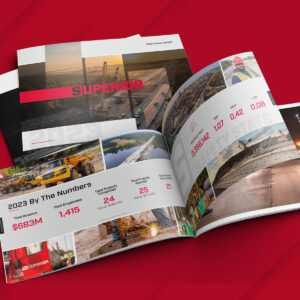
Some of the strongest recruiting content also comes through university partnerships. One example we love came from our client, Superior Construction, whose talent acquisition team partnered with the Florida State University Career Center to take over the Career Center’s Instagram account for a day. Former Superior intern Mattie Peasah shared her experience directly with fellow students — the kind of peer-to-peer storytelling that resonates far more than traditional recruiting language.
Put a Real Person at the Center
Students build relationships with people, not generic recruiting inboxes.
This reflects a broader shift happening across AEC marketing. The firms standing out today are the ones bringing real people and expertise to the surface — not hiding behind generic company messaging, polished project descriptions or corporate language. The same idea applies to internship recruiting.
Every internship program should have a visible human point of contact who appears consistently across recruiting materials, emails, career fair collateral, FAQs and orientation content. Including a name, direct email and phone number makes the process feel personal and accessible — especially for younger candidates navigating their first professional recruiting experience. A named contact reduces hesitation, encourages follow-through and gives students an early signal of what the firm’s culture is really like.
Use Awards and Recognition Strategically
Internship-related awards and rankings provide the third-party validation that many students use to determine where to spend their summers. Programs like Yello and WayUp’s Top 100 Internship Programs and Vault’s Best Internships rankings spotlight organizations investing meaningfully in early-career talent development.
AEC firms should also think beyond internship-specific rankings. Workforce development awards, “best places to work” recognitions, women in construction initiatives, university partnership honors and culture awards can all reinforce the firm’s talent brand.
Even if a firm doesn’t win, the submission process is often worthwhile. It forces leadership to think strategically about the program, gather testimonials and metrics, identify differentiators and define the story they want prospective interns to hear.
The Best Internship Programs Are Designed to Be Shared
In a competitive talent market, the best internship programs don’t just happen inside the firm; they’re designed to be seen, shared and remembered. The most marketable programs are usually the most intentional — they have structure, substance and a clear point of view about what young professionals need and how the firm can help them grow.
AEC firms that want to attract stronger interns should start by asking a simple question: Is our internship program something students would want to tell other students about?
If the answer is no, the marketing problem may actually be a program design problem.
But when firms build internships with a strong story, meaningful work, a visible community and a clear path forward, marketing becomes much easier. Students can see the value. Interns can tell the story. Alumni can advocate for the experience.
And over time, the internship becomes more than a summer staffing solution. It becomes one of the firm’s strongest tools for recruiting, retention and brand-building.
Related AEC Content
Building a Bold Brand for an Award-Winning Women in Construction Initiative
Jessi Bruton | Jul. 22, 2026
From Occasional Commentary to a Consistent Thought Leadership Program
Reputation Ink | Mar. 19, 2026