Inksights Blog : The Reputation Ink Blog
The Question AEC Buyers Are Asking: Is There a Real Expert Behind This?

By Steven Gallo | Read more by this author
4.29.26
Most AEC marketing hides the very thing buyers care about most. Humanizing your firm means bringing that expertise to the surface.
Everyone says they don’t have a story.
I’ve heard that repeatedly as a journalist and for as long as I’ve worked in marketing and PR. Engineers, architects, project managers, lawyers — the response is often the same: “I’m not the person you want to talk to,” or “My part of the project isn’t very interesting.”
But after 20 minutes and the right questions, the stories always surface.
An engineer walking through how the team solved a late-night drainage crisis before a scheduled concrete pour. An architect explaining how a nurses’ station was designed to maintain sightlines to every patient room. A project manager describing how a project nearly stalled — and what it took to get it back on track.
These moments aren’t just interesting. They reveal something far more important: how experts think, solve problems and make decisions. And in today’s environment, that’s exactly what buyers are looking for.
Because when anyone can generate polished marketing content in seconds, AEC buyers are quietly asking a different question: Is there a real expert behind this?
The AI Content Explosion
Artificial intelligence is fundamentally changing how content gets created. Today, anyone can generate website copy, social media posts, blog articles and even proposal drafts in seconds.
That’s not necessarily a bad thing. AI is an extraordinary tool, and many marketing teams are already using it to brainstorm ideas, draft content or streamline workflows. But it introduces a new challenge.
For most of marketing history, the bottleneck in marketing was content creation. Writing took time. Editing took time. Producing marketing materials required real effort. Now, AI can generate polished content almost instantly, which means the constraint that once limited content production has largely disappeared.
When everyone can produce polished content quickly, the challenge shifts from simply producing content to giving buyers a reason to trust it.

When Everyone Sounds The Same
Corporate marketing has never been particularly good at standing out — especially in industries like architecture, engineering and construction.
It’s a conservative space. Firms are careful about what they say and how they say it. Over time, that caution has led to a kind of shared language: safe, polished and often indistinguishable. Phrases like “innovative solutions,” “client-focused teams” and “leading multidisciplinary firm” appear everywhere.
Long before AI, many firms already sounded the same, and this fast-evolving technology is only accelerating that pattern.
Because AI systems are trained on existing marketing language, they naturally reproduce the same phrases, structures and tone. What was once a gradual drift toward sameness has become instantaneous. Now, anyone can generate content that sounds polished (and interchangeable) in seconds.
At the same time, another dynamic is emerging alongside the explosion of AI-generated content: buyers are becoming more skeptical of it. When sophisticated marketing language can be produced instantly, language alone becomes a weaker signal of expertise. The words may sound right, but they no longer carry the same weight.
Increasingly, audiences are looking for something deeper — reassurance that real expertise exists behind the words:
- An engineer explaining why a design decision was made
- An architect discussing the constraints that shaped a project
- A project manager describing how a stakeholder conflict was resolved
These details are difficult for AI to fabricate convincingly because they come from lived experience. And that’s exactly what makes them powerful.
Why Trust Matters More Than Ever in AEC Buying Decisions
In industries like architecture, engineering and construction, this skepticism is especially important because hiring decisions carry real consequences.
AEC projects often involve millions of dollars, public scrutiny, regulatory oversight and long timelines. When organizations select an engineering or architecture firm, they are not simply choosing a service provider. They are managing risk.
Behavioral research shows that people in high-stakes environments often care more about avoiding a bad decision than making the perfect one. Psychologists refer to this as loss aversion. In practice, it means that decision-makers worry less about hiring the most impressive firm and more about avoiding the firm that might cause problems later.
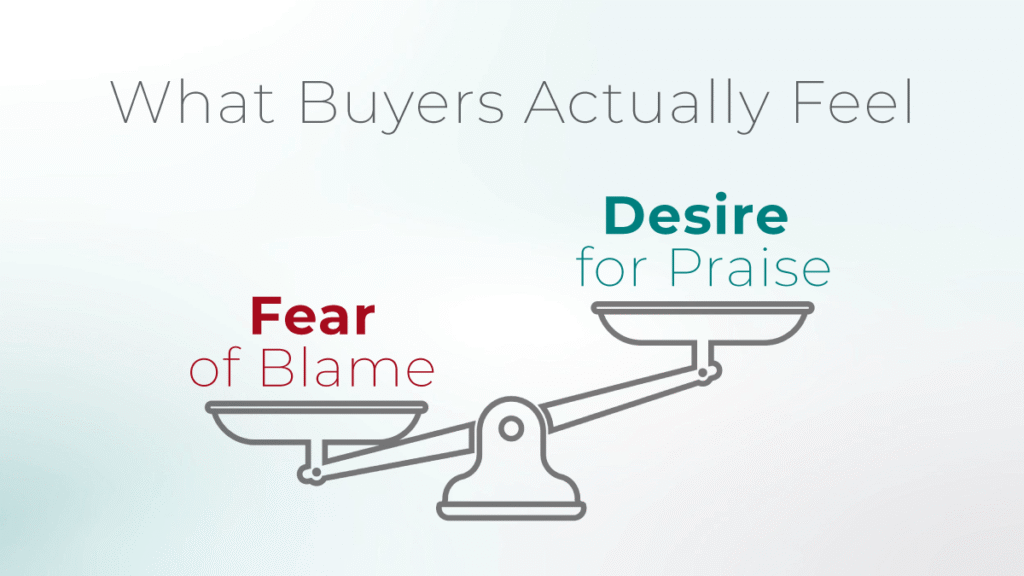
In these situations, buyers look for signals that reduce uncertainty. One of the most powerful of those signals is trust.

“Trust develops faster when people feel familiar with the experts behind the work. Recognition rarely comes from logos or taglines. Instead, it comes from seeing the people who solve the problems, explain the decisions and demonstrate the thinking behind the work.”
What It Means To Humanize Your Marketing
Humanizing your marketing doesn’t mean becoming less professional or abandoning technical credibility. It simply means shifting the spotlight from generic firm messaging to the people whose expertise actually creates value.
Every AEC firm already has something incredibly valuable: subject-matter experts who solve complex problems every day. The challenge is that their expertise often remains invisible in marketing materials. Humanizing marketing means bringing that human expertise to the fore so potential clients can see how your firm thinks.
The HUMAN Framework
I recently presented on humanizing marketing for AEC firms at the Society for Marketing Professional Services Northeastern Regional Conference (NERC) in Washington, D.C. In it, I proposed a “HUMAN” framework, with five ways to elevate the expertise already within your firm.
Highlight leadership voices
Many firms produce a steady stream of marketing content, yet their leadership perspectives remain largely invisible to external audiences. When executives share insights on industry trends, project challenges or emerging risks, they demonstrate credibility in a way that generic firm messaging cannot.
In Hinge Marketing’s annual report of high-growth professional services firms, including AEC firms, the 2026 study found that firms with stronger expert (i.e., human) participation in thought leadership materially outperformed no-growth peers.
You can’t solely rely on old-school individual relationship-building, either. Edelman and LinkedIn’s 2025 B2B Thought Leadership Impact Report found that: “buying decisions are increasingly consensus efforts between the principal buyer and a hidden group of critical influencers. Unlike primary buyers, these hidden influencers are less likely to have any direct relationships with the provider. It is here that high-quality thought leadership plays a vital role in credentialing a professional services firm and differentiating it from the competitive mass.”
Uncover subject-matter expertise
Many experts believe their knowledge isn’t particularly interesting. In reality, the opposite is often true. When marketers ask the right questions — about design constraints, project turning points or difficult decisions — valuable insights emerge that can become compelling content. To extract the human element, marketers must ask questions that tell a story. This goes beyond your standard specs, digging deeper to uncover defining scenes, vivid quotes and memorable moments.
Make bios strategic
Leadership bios are often among the most visited pages on firm websites and in proposal packages, yet many read like résumés. Stronger bios reveal how someone approaches problems, what types of challenges they enjoy solving and what perspective they bring to projects.
Activate the right platforms
Expertise must appear where audiences can actually encounter it — and where they trust the information.
Decades of research show that how people evaluate information is heavily influenced by the perceived credibility of the source and the environment in which it appears. In other words, the same insight carries more weight in a trusted industry publication than it does in a low-context or self-promotional setting.
That’s especially true in B2B. Thought leadership works because it builds trust, but that trust is reinforced (or undermined) by where the content shows up. LinkedIn commentary, trade media interviews, short project videos and industry presentations all help build recognition over time — not just because they reach your audience, but because they place your expertise in environments where it’s more likely to be believed.
Normalize people-first storytelling
AEC marketing frequently focuses on project specifications such as square footage, materials and sustainability certifications. While these details matter, they rarely capture the moments where expertise truly appears: the constraint that shaped the design, the unexpected challenge or the decision that changed the project’s direction. This kind of storytelling engages audiences in a way that no other tactic can.
Where This Shows Up in Your Marketing
The HUMAN framework can transform many parts of an AEC firm’s marketing ecosystem:
- Case studies become more compelling when they reveal the thinking behind the work rather than simply describing technical details.
- Proposals become more persuasive when they illustrate how teams respond to complex project situations.
- Award submissions become stronger when they highlight the moments of creativity, judgment or problem-solving that made a project noteworthy.
The throughline is simple: evaluators, clients and selection committees remember decisions, not square footage. Humanizing these formats is how you give them something worth remembering.
Want to Put These Ideas Into Practice?
If yIf you’d like to explore these concepts further, we’ve created a set of resources based on my recent presentation at SMPS NERC 2026, “Humanizing AEC Firms in the Age of AI.”
The resource page includes:
- The full presentation deck
- A worksheet to help identify the hidden experts in your firm
- Practical ideas for surfacing project insights and subject-matter expertise
Start using them today to answer the question buyers are quietly asking: Is there a real expert behind this?
Access the Presentation and Worksheet
Related AEC Content
Building a Bold Brand for an Award-Winning Women in Construction Initiative
Jessi Bruton | Jul. 22, 2026

From Occasional Commentary to a Consistent Thought Leadership Program
Reputation Ink | Mar. 19, 2026