Inksights Blog : The Reputation Ink Blog
Don’t Wait for the Storm: How Consistent AEC Marketing Brings Crisis Resilience

By Kathryn Bracho | Read more by this author
12.1.25
Are you the type to keep an umbrella in your car, just in case? Or do you find yourself running into Target to buy one when the storm hits?
Many architecture, engineering and construction firms approach crisis communications the second way — scrambling to build credibility when they need it. The firms that weather storms best have consistent AEC marketing already working for them. The same marketing that builds a brand and wins work also creates the trust equity that protects you in a crisis.
AEC Marketing: Create Context Before Crisis Hits
There are two kinds of AEC firms: those that market to build trust — and those forced to market when they need to rebuild it.
Marketing builds the external and internal trust that makes you crisis-ready. Through owned channels you control — your website, blog, social media, newsletters — you consistently demonstrate your firm’s values and capabilities. When trouble strikes, stakeholders see one incident in the context of hundreds of positive data points. The crisis coverage appears alongside your established narrative, not as your only narrative.
Crises don’t just threaten reputations — they disrupt business development. A single incident can derail bids, delay partnerships and make clients nervous. Marketing isn’t a vanity exercise. It’s risk mitigation that keeps your firm’s credibility intact when scrutiny comes.
When something goes wrong at your firm, where do people look first? Your website. Your LinkedIn. Your recent news coverage. If they find only a couple of project announcements from last year and some employee headshots, you don’t have much of a foundation to stand on.
But if they find years of content demonstrating your expertise, values and track record, that single incident becomes one data point in a much larger story.
Build Your AEC Marketing Buffer
What does crisis-ready marketing for architecture, engineering and construction firms actually look like? Here’s what to build before you need it:
- Content marketing: Think regular blog posts, consistent social media, newsletters, case studies. When a reporter Googles your firm during a crisis, you want them to find pages of content demonstrating your expertise, not just your website homepage and the crisis story.
- Digital presence: On your website, project photos and staff bios aren’t enough. You need clear articulation of your values. Safety commitments backed by specifics. Regular updates. A robust project portfolio. Your website is often the first place people search when something goes wrong. Make sure they find substance, not an empty presence.
- Executive visibility: In a crisis, leaders who already have a visible, authentic voice through blogs, videos or social media are far more credible. If stakeholders are hearing from your CEO for the first time during an incident, it’s already too late.
- Values-based marketing: Showcase safety, sustainability and workforce development consistently over time. When an emergency happens and you say “we’ve always prioritized safety,” people need to be able to verify that. Such claims ring hollow without marketing history to support them. Firms with well-defined brand values don’t have to invent their identity in a crisis.
What It Looks Like: AEC Marketing In Action
Before the Port Arthur LNG tragedy in April 2025 — an incident that claimed three workers’ lives — Bechtel had years of marketing investment working in their favor: their “To the Extraordinary” brand campaign, blog posts and professional marketing collateral.
When the crisis hit, CEO Craig Albert could immediately reference their safety culture as “a point of pride, built through thousands of actions over many decades.” And people could verify it.
Bechtel proactively released their internal investigation findings before OSHA completed their report, demonstrating transparency consistent with established brand values. Their pre-existing commitment to construction safety, including co-leading an industry-wide suicide prevention initiative, meant their crisis response felt authentic, not opportunistic.
Internal Communications: Build Trust from Within
Remember the umbrella? Internal communications are part of it.
When challenges emerge, your external marketing can only do so much if your own employees are skeptical. Picture this: your firm faces a serious incident. Your carefully crafted crisis statement goes out. Then a reporter interviews one of your field workers who says, “We never hear from leadership unless something’s wrong.”
That single quote destroys your entire crisis response.
Firms with consistent internal communications have employees who already trust the messenger. They’re accustomed to hearing from leadership regularly — not just when there’s bad news. So in those difficult moments, employees hear the message first and believe it. They become advocates rather than critics.
External marketing and internal communications work in tandem. The same authenticity that builds public trust also shapes how employees respond — and their reactions often define how the story spreads.
What It Looks Like: Internal Communications In Action
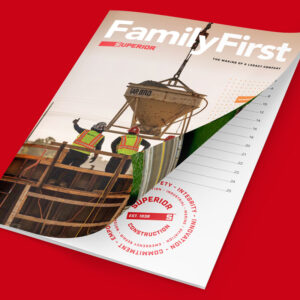
Heavy civil contractor Superior Construction uses its quarterly Family First newsletter to build connections between employees in the office and field, creating trust equity before they need it.
Available in both English and Spanish, the newsletter is mailed to every field employee’s home so families can be part of the Superior story. The regular cadence means employees expect to hear from leadership quarterly. Consistent tone means they recognize and trust that voice. Content that celebrates achievements while honestly addressing obstacles makes leadership seem credible, not just promotional.
The result? When crisis communications need to flow through the organization, Superior already has an established channel employees actually read, a trusted leadership voice and a pattern of transparency.
At Superior’s recent Leadership Forum — the company’s annual gathering — employees called the newsletter a “must-read.” That’s internal trust you can’t manufacture during an emergency.
Ready Your AEC Marketing Before It Rains
Audit your AEC firm’s current marketing against crisis readiness:
- When did we last publish content? If your blog has been dormant for 18 months, you’re not building trust equity.
- What do our website and social channels say about our values? Can stakeholders verify our safety commitments? Our sustainability goals? Or are these just claims without evidence?
- How often do employees hear from leadership? Is it only when something’s wrong? Or is there consistent, transparent communication?
- Where’s the integration between our marketing and PR efforts?
Start with external consistency. Commit to monthly content that demonstrates your values and capabilities. Document your commitments visibly. Share project stories regularly.
Build internal communications. Launch a quarterly newsletter. Establish regular leadership updates. Share both wins and challenges.
Integrate with PR efforts. Use marketing channels to amplify earned media. Turn internal stories into external content. Align messaging across all channels.
The time to build trust equity is now — not when you’re already managing a crisis.
Think about marketing as insurance. Every blog post, every newsletter, every value you demonstrate publicly becomes part of the foundation that holds when crisis hits. The firms that survive with their reputations intact didn’t scramble to build credibility in the moment. They already had the umbrella in the car. Do you?
Related AEC Content

From Occasional Commentary to a Consistent Thought Leadership Program
Reputation Ink | Mar. 19, 2026
Maximizing Employee Engagement Through a Compelling Employee Newsletter
Reputation Ink | Jun. 24, 2025