

Spill the Ink: The Reputation Ink Podcast
Why Human Trust Beats AI Visibility Shortcuts

Published on November 19, 2026
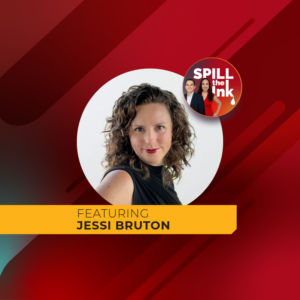
Law and AEC firms that earn human trust first will show up in AI search next. Michelle Calcote King, principal and president of Reputation Ink, takes the guest seat as host Steven Gallo asks what she learned at MAICON, the Marketing AI Conference, in sessions led by Wil Reynolds of Seer Interactive and Joe Pulizzi. They discuss why showing up in ChatGPT covers only the first step of being seen, believed and chosen, why shortcuts to AI visibility tend to fade and how rankings, awards and trade media coverage give AI tools and human buyers third-party proof they can trust. Michelle also explains why firms should build a roster of individual voices instead of funneling everything through one brand voice and how marketing teams can act as producers for their subject matter experts.
Here’s a glimpse of what you’ll learn
- Why MAICON’s biggest theme was trust rather than tools and tactics
- Wil Reynolds’ framework of being seen, believed and chosen
- Why shortcuts to AI visibility eventually stop working
- How coverage, rankings and speaking engagements serve as proof for AI and human buyers
- Why firms should build a roster of individual voices instead of relying on one brand voice
Resources mentioned in this episode
- MAICON (Marketing AI Conference)
- Seer Interactive
- Joe Pulizzi
- Reputation Ink
- Michelle Calcote King on LinkedIn
- Steven Gallo on LinkedIn
Transcript
Disclaimer: This is an AI-generated transcript of our podcast. It may contain mistakes, including spelling and grammar errors.
[00:00:00] Michelle Calcote King: AI is making content cheap and endless. We have tons of it, and when that supply outpaces demand, real human expertise is what stands out.
[00:00:16] Announcer: Welcome to Spill the Ink, a podcast by Reputation Ink, where we feature experts in growth and brand visibility for law firms and architecture, engineering and construction firms. Now, let’s get started with the show.
[00:00:33] Steven Gallo: Hi, everyone. I’m Steven Gallo, your host and the vice president of client services at Reputation Ink. We’re a marketing and public relations agency for B2B professional services firms, including law and AEC firms. You can learn more at rep-ink.com. That’s ink with a K. It’s 2026, and every firm wants to show up when a client asks ChatGPT for a recommendation, right? And of course, a whole industry has popped up promising to get those folks there. But at MAICON, that’s the Marketing and AI Conference, two of the most talked-about speakers argued that chasing AI visibility actually misses the point.
So today, I’m flipping the script on our usual host, Michelle Calcote King, principal and president of Reputation Ink. She just got back from MAICON, and she’s here to share what Wil Reynolds and Joe Pulizzi taught her about trust, human voices and why the shortcuts just don’t last. Michelle, welcome to your own show. It’s great to have you.
[00:01:33] Michelle Calcote King: Thanks. I’m excited to talk about this.
[00:01:35] Steven Gallo: Yeah. Okay. So let’s get started. For listeners who haven’t been and may not be familiar, what is MAICON, and why did you decide to go?
[00:01:44] Michelle Calcote King: So MAICON is the Marketing AI Conference. It’s put on by the Marketing AI Institute, and they do it every year in Cleveland. I think it’s four or five years old. The Marketing AI Institute is really at the cutting edge of looking at how AI is impacting marketing. And it’s my job to stay on top of these things, so I decided to go this year.
[00:02:11] Steven Gallo: Yeah, absolutely. So what surprised you most? I imagine going into an AI conference, there’s so much ground to cover. Curious what stood out.
[00:02:20] Michelle Calcote King: For me, I came into it thinking I would attend a ton of tech sessions with tools and tactics and workflows and things like that, and there were definitely a lot of that. But what stood out to me was several speakers talking about trust and human trust and humans’ role in this AI world. The big message that I kept hearing in a couple of the really great sessions that I attended was that AI is making content cheap and endless. We have tons of it, and when that supply outpaces demand, real human expertise is what stands out.
[00:03:04] Steven Gallo: Right? I mean, the volume itself is overwhelming because of what AI can generate. I’m finding that too with our clients, that human touch is becoming that much more important. But of course, people want to be found, right? A lot of firms are focused on showing up in ChatGPT and other AI tools right now, this AI visibility we often talk about. Curious how that came up at the conference.
[00:03:32] Michelle Calcote King: So one of the sessions was by Wil Reynolds of Seer Interactive, and he’s long been one of the leading voices in SEO in the old… well, I shouldn’t call it the old search world, because that’s still very alive and well. But he’s also really at the forefront of AI visibility. And he made the claim that a lot of marketers are chasing the wrong thing. People are obsessing over whether they show up in these tools, in ChatGPT, in Claude, in Google AI Overviews. But his claim was, look, showing up isn’t just the goal, getting hired is.
He talked about being seen, believed and chosen. Seen is that visibility, believed is whether the person trusts that you can solve their problem, and chosen is whether they actually pick you. One of his quotes, I’ve got it written down here, he said, “AI visibility covers the first one.” And then he also said that “AI search and Google search are nothing more than proxies for human trust.” I think that’s a really great way of talking about how these tools now are that middleman for whether or not a potential client trusts that you can solve the problem they’re looking to solve.
[00:05:03] Steven Gallo: Sure, yeah. And for law and AEC firms in our audience, this isn’t necessarily a new thing, because there’s always the general counsel and owner, that decision-maker who’s trying to see if they can trust you, if they can believe you before they hire you. But I love that, the seen, believed and chosen. Because I think a lot of people, like you said, are just focusing on that first third of seen. But that’s still a good thing, right? Showing up in AI.
[00:05:31] Michelle Calcote King: Well, he actually gave this really good example where he did a live search and the AI engine returned an answer that mentioned a brand but actually anti-recommended them. So…
[00:05:48] Steven Gallo: Interesting.
[00:05:48] Michelle Calcote King: It said, “Here are some options, but I don’t think you should go with this choice.” So if you’re just measuring whether you show up or not, you’re kind of missing a bit of the game, because AI might be saying, “They’re not a fit. Don’t choose them.” So you’ve got to look at what’s being said around your brand name, not just whether you’re showing up.
[00:06:10] Steven Gallo: Good point. Yeah, not all PR is good PR, contrary to that old saying, right? The context is important. So what about a lot of these firms, vendors out there promising to get firms into AI answers and citations fast? What did they have to say about that?
[00:06:29] Michelle Calcote King: It’s interesting, because I’m 50, so I’ve been around a long time, and I watched how the whole Google search game played out. Early in Google search, there was a lot of keyword stuffing or other tactics that were gaming the algorithm. In other words, they weren’t earning that visibility. He had a term for that. He called it loophole lists. They’re looking for those shortcuts to visibility instead of earning it.
In our world, that would be the pay-to-play awards with no real vetting, using AI to generate content without any kind of human expertise or human insight. There’s been this trend of firms putting out “top whatever in their category” and then naming themselves. These sorts of things work for a minute. They work until they don’t anymore, and then your brand takes a hit. His argument was, don’t chase that, don’t use that loophole. Instead, focus on the long game. Earn that trust.
The example he gave is Google’s Panda and Penguin updates. In 2011 and 2012, you had a lot of sites built on content farms, link schemes, things like that, and then they lost all of that search they’d gotten through those loopholes. But the people who were in it for the long game, who were publishing really authoritative content, who were earning their visibility, are what went out in the long run.
[00:08:18] Steven Gallo: Yeah, that’s really interesting. And I think it all arrives back at the point, right, that regardless of how these tools are intersecting with our work, at the end of the day there’s still a human being judging and making that call about who to hire. So yeah, that’s a good point. Okay, so if keyword stuffing and that cast-the-widest-net approach isn’t necessarily what works, what did they say does?
[00:08:46] Michelle Calcote King: Well, what I loved about it is I was sitting in the audience and I was thinking, “Wait a minute.” He kept talking about receipts. He used the term receipts a lot, and he talked about the proof behind what you say about yourself. And I was sitting there thinking, he’s just talking about PR. He’s talking about the thing we do every day. So coverage in the publications that are authoritative, legitimate rankings, speaking at the right conferences. What I love is it feels like AI is making the journalist and the editor and the award judge important again, because it draws on their credentials.
He showed this AI answer that put skeptical quotation marks around a self-proclaimed expert’s credentials. In other words, AI is always going to go look for those receipts. And receipts don’t just happen, as you and I know, people who do this for a living. Nobody stumbles into a great Chambers and Partners ranking for law firms or a really great feature in ENR for our AEC clients. You have to advocate for them. You have to do what we do for our clients, which is put really thoughtful, very deep submissions together. We’re constantly showcasing our clients’ expertise through thoughtful content and submissions. That’s what generates those receipts, in Wil’s terminology.
[00:10:20] Steven Gallo: Yeah, that makes a lot of sense. And it’s exactly like you said, what PR produces. But it’s not a short game. How long does it take to build that kind of credibility?
[00:10:32] Michelle Calcote King: It’s not. And this is always one of those… I hate to tell you this when I’m talking to clients, but this isn’t a quick thing. This is a long game. In many cases, it takes years. He gave the example, and I thought it was a great one, of the Michelin Guide. I mean, this is a tire company, but now it’s the authority on what a great restaurant is, whether or not you’re a great restaurant. His point was that patience works, and I’ve seen this time and time again, not only with our own brand at Reputation Ink but with clients. You can’t do it with one article, with one award win. It has to be consistent and over the long run, and usually we’re talking years here. So it’s an investment in how you tell your story over and over again for the long run.
[00:11:26] Steven Gallo: Yeah, and consistency, to your point, is a big piece of that. Okay, so based on what you’ve learned, what you heard, any quick takeaways, one thing a marketer could maybe try this week just based on his session?
[00:11:41] Michelle Calcote King: Yeah. And he wasn’t saying AI isn’t useful. I love AI. I use it a lot. But he talked about, for example, his team analyzes sales call transcripts, the conversations that his sales team is having with prospects. They use AI to analyze all those transcripts and pull out what topics are surfacing, so what’s on their prospects’ minds. They did a blog post on one of those, and it became one of the best-performing posts in their agency’s history. For our clients, that means talk to your partners about what they’re hearing in pitches. See if they can record those calls or those transcripts. Think about whether you’re answering those questions, and those gaps are where you can create content and answer those questions.
[00:12:42] Steven Gallo: I love that because, whether it’s sales transcripts or whatnot, firms are creating this data, and it’s stored somewhere. But now AI lets us tap into that, and it’s waiting and ready. That’s a great example. Any other sessions that maybe stood out to you? I know we mentioned Joe Pulizzi. Would love to hear what he shared.
[00:13:05] Michelle Calcote King: Yeah. I’ve followed Joe Pulizzi for many years because content marketing was the hot tactic when I started Reputation Ink. I’m pretty sure the Content Marketing Institute was founded around the same year that Reputation Ink was founded, and I’ve been a big proponent of content marketing. We, as an agency, put out a lot of content for many years. So I really wanted to attend his session, and he started out by saying he can’t recommend the model that he’s championed for years anymore, which is the brand as publisher. So Reputation Ink as the publisher or the law firm as publisher, the architecture firm as publisher.
He mentioned some famous content vehicles, if you’re in content marketing, that are the model for that. John Deere is very well known for its magazine, The Furrow, or Red Bull has its media house. These, again, are company as media publisher, which was something I championed for years, and it worked really, really well. In other words, the brand puts out the content, an audience grows patiently, an audience under the brand’s name. But his argument in the session was that more content from one brand voice isn’t the answer anymore. And he compared it to, which I also loved, SNL. I’ve been an SNL fan since I was a kid.
[00:14:49] Steven Gallo: Same. I want to hear this.
[00:14:51] Michelle Calcote King: Yeah. I love this comparison. So he talked about, look, SNL has lost Chevy Chase, Will Ferrell, Tina Fey, and it’s been on the air for 50 years. SNL is the brand, but the franchises are built around people. So think of Weekend Update, Church Lady, the Blues Brothers. The cast rotates, but the audience keeps coming back, and he called it a trust portfolio, so one brand in the middle of multiple human voices around it.
[00:15:23] Steven Gallo: Got it. I love that. And I won’t speak for anyone else who may be listening, I don’t know that I have the comic chops to be on SNL, but in terms of how we apply this to law and AEC firms, that maybe I know something about. So curious how that translates.
[00:15:38] Michelle Calcote King: Yeah. So for our clients, most firms funnel everything through one voice. You’ve got a law firm that puts out client alerts or certain reports, a blog, that kind of thing. And I would think actually law firms are a little more ahead of the game in terms of putting their people forward than other industries. But certainly AEC firms aren’t quite used to promoting their people. But our clients sell expertise. A GC hires a lawyer, not a logo, a brand. An owner hires the project team in the AEC world. So having a generic firm voice wastes that one thing that actually sets you apart. And if one partner leaves or burns out, if you’ve got it all built around just one person, that program goes with them.
[00:16:33] Steven Gallo: Yeah, eggs, basket, that whole thing. And you mentioned that law firms, by nature of lawyers being individual practitioners and the relationship-based nature of the work, might be a little bit ahead of the game in that sense. But I wonder where most firms stand today when it comes to their people creating the content, to your point, not just the brand.
[00:16:58] Michelle Calcote King: Yeah. I think in law firms it’s kind of by accident, right? One lawyer wants to launch a blog, or one lawyer feels really comfortable on LinkedIn. So there’s no real strategy behind it. And handing everyone the keys kind of scares firms, and I get that. Turnover is real, and also you don’t really know how they’re going to present themselves online. So what he did is link it to those content franchises, so really assigning a human to a content type. And he recommended starting with three voices, and also matching those voices to a particular content type. I think in terms of for us, we have our podcast here where you and I are the humans involved, but we also have newsletters that are authored by certain people as well. And he said, “Launch all three at once, not one and not everybody.” So start there and start seeing how it’s going.
[00:18:11] Steven Gallo: Interesting. And that makes sense. So that’s the subject matter expert, if you will, on the individual front. Where does the marketing team fit into all of this?
[00:18:26] Michelle Calcote King: So I think of it in terms of enablement. You stop trying to create everything yourself, and you become a producer. You’re picking talent, you’re picking the right format for the person, you’re providing that editorial help and oversight, which honestly is what we’ve been doing for a while. But in the end, always start with the audience. Where do we need to build that trust and with whom? Then look for somebody who knows something about that topic that you want to talk about, maybe who’s lived something. It reminds me of how a lot of trade publications really want voices. They want bylined articles by people who have actually been in the trenches, have done that work. Also, play to people’s strengths. Some people are great on a podcast, others write beautifully and aren’t so great on camera, so put them where they’ll shine.
[00:19:26] Steven Gallo: And I think that’s something too that I’ve talked about with many a client as well, that as that in-house marketer, that marketing team, your subject matter experts, they know their lane, they know their stuff, and so it’s how can you make the rest of it as easy for them and set them up for success, right? That’s a critical part of it. But aside from the subject matter expert, you might have marketers, a marketing team in-house. There’s also leadership, the C-suite, right? So I can imagine this conversation, just because I may have been privy to conversations like this before, where a managing partner or a principal hears this and they’re thinking, “Okay, but if we bank this on John, what happens when John leaves? What happens when he leaves?” Or, “What if they say the wrong thing?” Or, “What if this outgrows us as a firm and becomes its own vehicle?” A lot of questions, I’m sure.
[00:20:16] Michelle Calcote King: Yeah, it’s a good question, and I get it as a firm owner. Especially right now, what we’re seeing in the legal industry, where lateral moves are constant and lawyers are free agents, they can take their books of business when they move. But he came back to the SNL analogy. It loses stars all the time and keeps going. So the firm is going to own the content asset. If that person leaves, you can continue on, and you can put another human being in there. You might have to rework it a little bit, but you need to agree on those guardrails, those approvals, and have an exit plan. What happens if that person leaves? How are we going to do this content ongoing?
And Joe argued that if someone becomes bigger than the firm in terms of attention and reputation, he calls that a great problem to have, because in the end, this is the new world, where what people are paying attention to is the humans. And again, it goes back to that supply-demand thing that’s happening right now with AI-generated content. So the firms that really invest and build those human voices are going to be ahead of the ones that wait.
[00:21:37] Steven Gallo: Okay. So it sounds like the bottom line of Joe’s session, channel your inner Lorne Michaels and build those franchises, right? But between Wil’s and Joe’s sessions, I’m curious if you felt there was a common thread between those two, or anything that linked for you listening to them.
[00:21:59] Michelle Calcote King: Yeah. It landed in “market to humans and AI will follow,” which I loved. It doesn’t mean don’t pay attention to the things that can help with AI visibility, structure your content appropriately, all that. But in the end, focus on building human trust and the AI systems, because they are a proxy for human trust. So go earn human trust first and you will show up in these AI engines. And I think for our clients, for law firms, for architecture, engineering and construction firms, that’s good news, because your people are already your product.
[00:22:39] Steven Gallo: Exactly. Fascinating. And trust, especially now, right? Trust is just that much more important today, the more we’re inundated and have so many more voices. How do you establish that? So that’s great. Any other conclusions, final thoughts you’d like to leave our listeners with, fresh off of MAICON?
[00:23:00] Michelle Calcote King: Yeah. Just, like I said a minute ago, don’t chase the algorithm, or in AI terms, the model. Build the reputation with real people, real expertise and real third-party proof, which I know it sounds self-serving, but that’s what PR gives you and that’s what’s really going to last and have impact over the long term.
[00:23:24] Steven Gallo: 100%. Well, thank you, Michelle, for sharing some of your learnings from your most recent trip. We’ve been talking to Michelle Calcote King, of course, of Reputation Ink. Thanks for taking the guest chair today and coming to chat.
[00:23:38] Michelle Calcote King: Thank you.
[00:23:42] Announcer: Thanks for listening to Spill the Ink, a podcast by Reputation Ink. We’ll see you again next time, and be sure to click subscribe to get future episodes.
Related B2B Content

How High-quality Content Helped Instructure Increase Lead Generation in a New Market
Reputation Ink | Mar. 7, 2025

Positioning a New Energy Company and Helping It Grow With Quality Content and PR
Reputation Ink | Oct. 7, 2024

How Strategic Positioning Helped Trutechnology Communicate Its Unique Value
Reputation Ink | Sep. 7, 2024








Join the INKsights Email List
Get Exclusive Updates on Awards, Lists, Rankings, Editorial Opps and More.
Subscribe to our newsletter, INKsights, to receive insights (pun intended) on thought leadership, public relations, and marketing for B2B professional services firms sent straight to your inbox.
Available only to our email subscribers:
Once a month, you’ll receive the latest awards, rankings, lists and editorial opportunities in the legal or AEC industry (you choose which you’d like to receive).
In the off weeks, we send you our latest thinking on the marketing and PR issues facing those industries. You can opt out anytime (although we’ll bet our favorite coffee mug you’ll never want to leave).